‘‘Artificial stupidity’’ and what art and performance can teach critical AI studies?
Apart from the common concerns raised about copyright and the undermining of creative labour, art and performance are not the first arenas that come to mind as central to the study of artificial intelligence. Understandably, technical expertise, industrial practice and, increasingly, political economy dominate such discussion.
It should be remembered, though, that one origin of AI lies in a communicative test organised around performance. Alan Turing’s ‘imitation game’, in effect, links intelligence to successful acting. A machine produces responses that convince a human interlocutor.
The ways in which humans, can also play stupid or act the underdog strategically, is relevant here. Turing also considered whether a machine might deliberately give incorrect answers in order to appear more convincing. Philosopher Avital Ronell referred to forms of othering that falsely deemed certain groups intellectually inferior, and to the barbarous uses of IQ testing in the early twentieth century, as ‘artificial stupidity’. Extending this, those subject to such stereotyping may exploit it by feigning ignorance or stupidity, another form of artificial stupidity. Paradoxically, people can even fool themselves, as explored in Robert Trivers’ sociobiological research. Arguably, such processes are intrinsic to creative processes too. If the relation between intelligence and supposed stupidity is active in human systems, then would it not also be important to algorithmic processes and machine intelligence?
For cognitive scientist and psychologist, Margaret Boden, a reversal of this method was employed: her interest in AI stemmed from what it might teach us about human intelligence including creativity. While her life’s work confirmed the importance of artistic domains to questions of cognition, intelligence and creativity, she tended to overlook one applicable feature of art as it developed in the twentieth century. The word intelligence derives from Latin intelligere, from inter (‘between’) and legere (‘to choose’ or ‘to pick out’) and artistic practice has long treated such operations as central. Marcel Duchamp’s readymades transformed ordinary objects through acts of designation. In addition, Niklas Luhmann’s systems theory directs attention to decision making as a social process. Cultural value emerges through selection, agreement and institutional recognition.
Perspectives informed by arts/humanities disciplines and approaches, can complicate dominant accounts of machine intelligence within cognitive science. The lecture takes up the relevance of dramaturgy and developed artistic concepts to AI, while using the concept of ‘artificial stupidity’ to interrogate emerging technologies, systems and definitions of intelligence itself.
Bio:
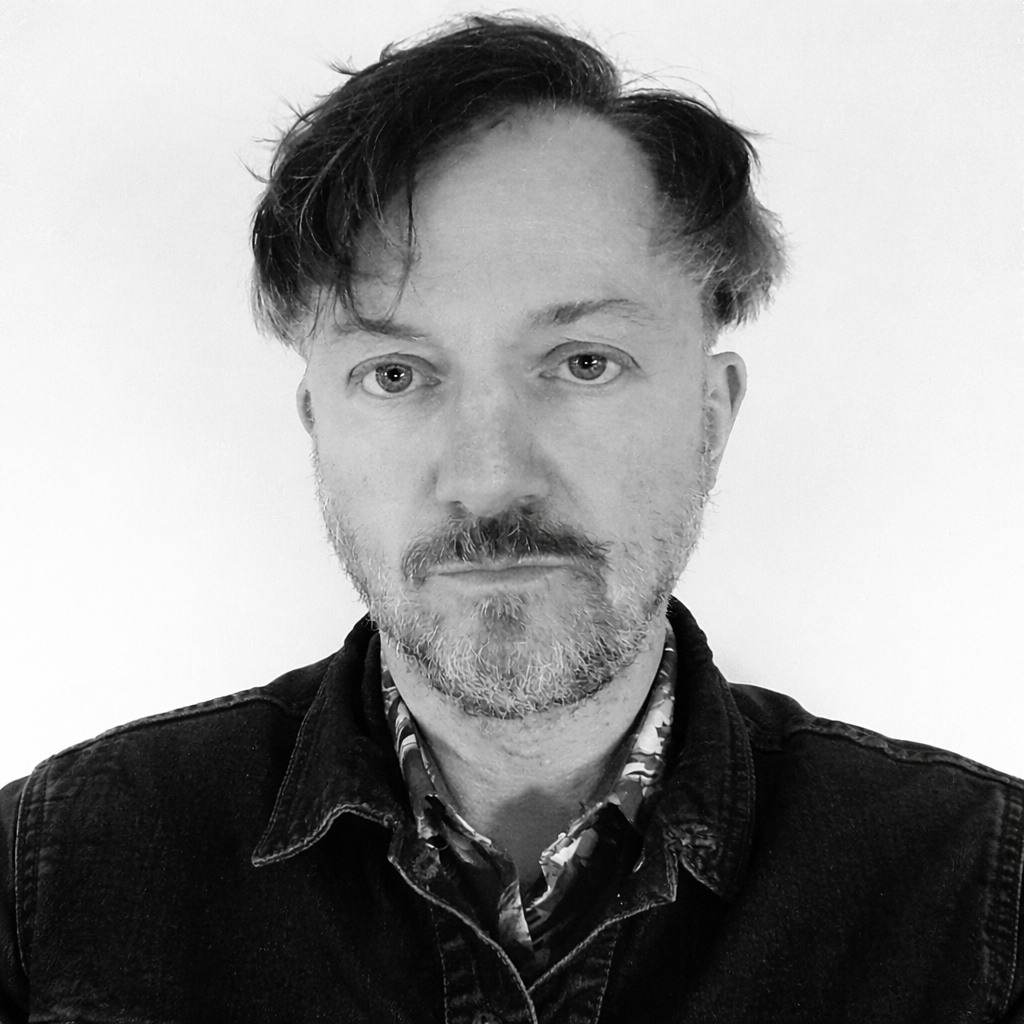
Dr Micheál O’Connell is an artist (often working under the moniker Mocksim) and researcher whose work engages processes of misuse, interference and performance across photographic, bureaucratic and digital systems, as well as larger infrastructures such as transport networks. These activities are developed through exhibitions, moving image, writing and live events.
His research draws on four overlapping areas: fine art and post-conceptual practice, industry experience in coding and simulation, political economy and community activism, and dramaturgy, particularly comedy. This combination informs his current research on ‘artificial stupidity’ in technological and social systems, the subject of a forthcoming book. His touring exhibition System Interference (2022–24), supported by the Irish Arts Council, was accompanied by philosopher John Roberts’ Art, Misuse and Technology: Micheál O’Connell’s ‘System Interference’. His work has also been shown at Whitechapel Gallery, Lighthouse (Brighton) and Les Rencontres d’Arles. He is Associate Professor and Head of Creative and Critical Practice at the University of Sussex, UK.